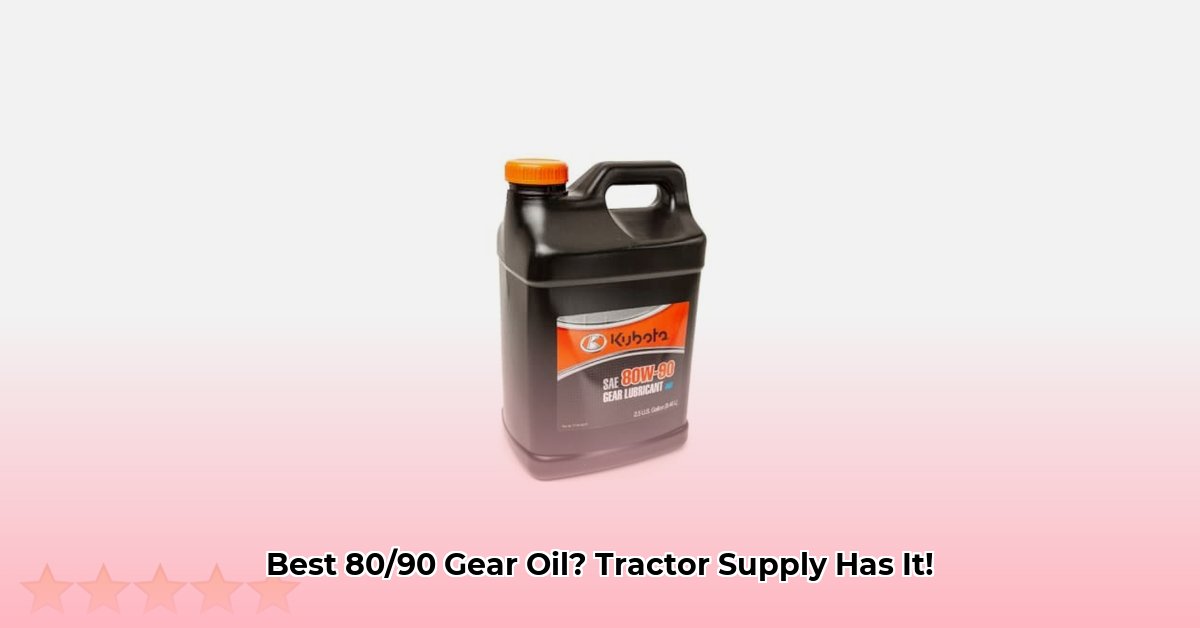
Understanding 80/90 Gear Oil: What Does it Mean?
The "80/90" designation in 80/90 gear oil refers to its viscosity grade (thickness). The higher the number, the thicker the oil. This specific grade is a medium-weight oil, suitable for a range of applications and temperatures. Its primary function is to lubricate gears, reducing friction, wear, and heat buildup. This translates to smoother gear operation, extending the life of your equipment. Think of it as a protective barrier between moving metal parts. Isn't smooth, efficient operation what you want from your farm equipment? For more on hydraulic hoses, check out this helpful resource: hydraulic hose information.
Applications in Agricultural Machinery: Where 80/90 Gear Oil Shines
80/90 gear oil's versatility makes it a valuable asset on any farm. It's frequently recommended for a wide array of agricultural machinery, including tractors, combines, hay balers, and other heavy-duty equipment. The constant stress on gears within these machines demands a robust lubricant, and 80/90 gear oil delivers, reducing wear and preventing costly breakdowns. How much downtime can your farm afford? Maintaining your equipment with the right lubricants is essential for productivity and profitability.
Finding 80/90 Gear Oil at Tractor Supply: Your One-Stop Shop
Tractor Supply Company (TSC) is a popular and convenient source for 80/90 gear oil. They stock a variety of brands and packaging sizes to meet any farmer's needs, from quarts for smaller jobs to gallons for larger equipment maintenance. Checking their website 1 for current pricing, availability, and brand selection is a wise first step. Don't forget to look for any sales or discounts! But remember, comparing prices from different brands is crucial for finding the best value. What is your budget for farm equipment maintenance?
Choosing the Right 80/90 Gear Oil: A Step-by-Step Guide
Selecting the appropriate gear oil is crucial for protecting your investment. Follow these steps for optimal results:
- Consult Your Owner's Manual: This is paramount. Your equipment's manual will specify the exact type and viscosity grade recommended by the manufacturer. Ignoring this could lead to serious damage.
- Consider Your Climate: Thicker oil (like 80/90) is beneficial in colder climates to ensure adequate lubrication even at low temperatures. For extremely hot climates, refer to your manual for alternative recommendations.
- Assess Usage: Heavy-duty applications may require a gear oil with enhanced properties, such as increased resistance to extreme pressure.
Proper Handling and Disposal: Safety First, Always
Gear oil should be handled responsibly to ensure safety and environmental protection:
- Wear Gloves: Always wear protective gloves when handling gear oil to prevent skin contact.
- Immediate Cleanup: If accidental skin contact does occur, wash the affected area thoroughly with soap and water.
- Responsible Disposal: Never pour used gear oil down the drain or onto the ground. Contact your local waste disposal facility or recycling center to determine the appropriate disposal method.
Brand Comparison: A General Overview
Direct price comparisons require visiting Tractor Supply or checking their online catalog, as pricing varies by location and promotions. However, here's what to consider when determining which 80/90 gear oil is right for you:
| Brand | Potential Features |
|---|---|
| Brand A | High-temperature resistance, extreme pressure additives |
| Brand B | Extended drain intervals, rust and corrosion inhibitors |
| Brand C | Specific formulation for certain types of gearboxes |
Remember, the best brand and type of 80/90 gear oil are dependent on your specific needs and equipment. Always consult your owner's manual for guidance. Proper lubrication is essential for keeping your farm equipment running smoothly and efficiently for years to come.